Polypropylene (PP) vs HDPE for Plastic Roll-On Balls: Complete Technical Guide

A detailed comparison of the mechanical, thermal, chemical, and cost properties of the two materials we use to manufacture precision plastic roller balls. Written for formulators, packaging engineers, and procurement managers.

Why Does Material Selection Matter in a Roll-On Ball?

Choosing between polypropylene (PP) and high-density polyethylene (HDPE) for the plastic balls in a roll-on package is not a trivial decision. The material determines chemical compatibility with your formulation, the user's application experience, mechanical strength during shipping, long-term dimensional stability, and the unit cost of the component.

Both materials are thermoplastic polyolefins — they belong to the same polymer family. Both are suitable for precision injection molding, both are available in FDA-compliant grades, and both are chemically inert to most standard cosmetic and pharmaceutical formulations. When comparing PP or HDPE as a roller ball material, the difference lies in the technical details that impact specific applications.

At Molding S.A.S. we manufacture spheres in both materials — we are the only manufacturer of hollow plastic roll-on balls in Colombia, injection manufacturers since 2007, with a five-year R&D program invested in the geometry and shrinkage behavior of each resin. This guide will help you make an informed decision based on your product, your market, and your operating conditions.
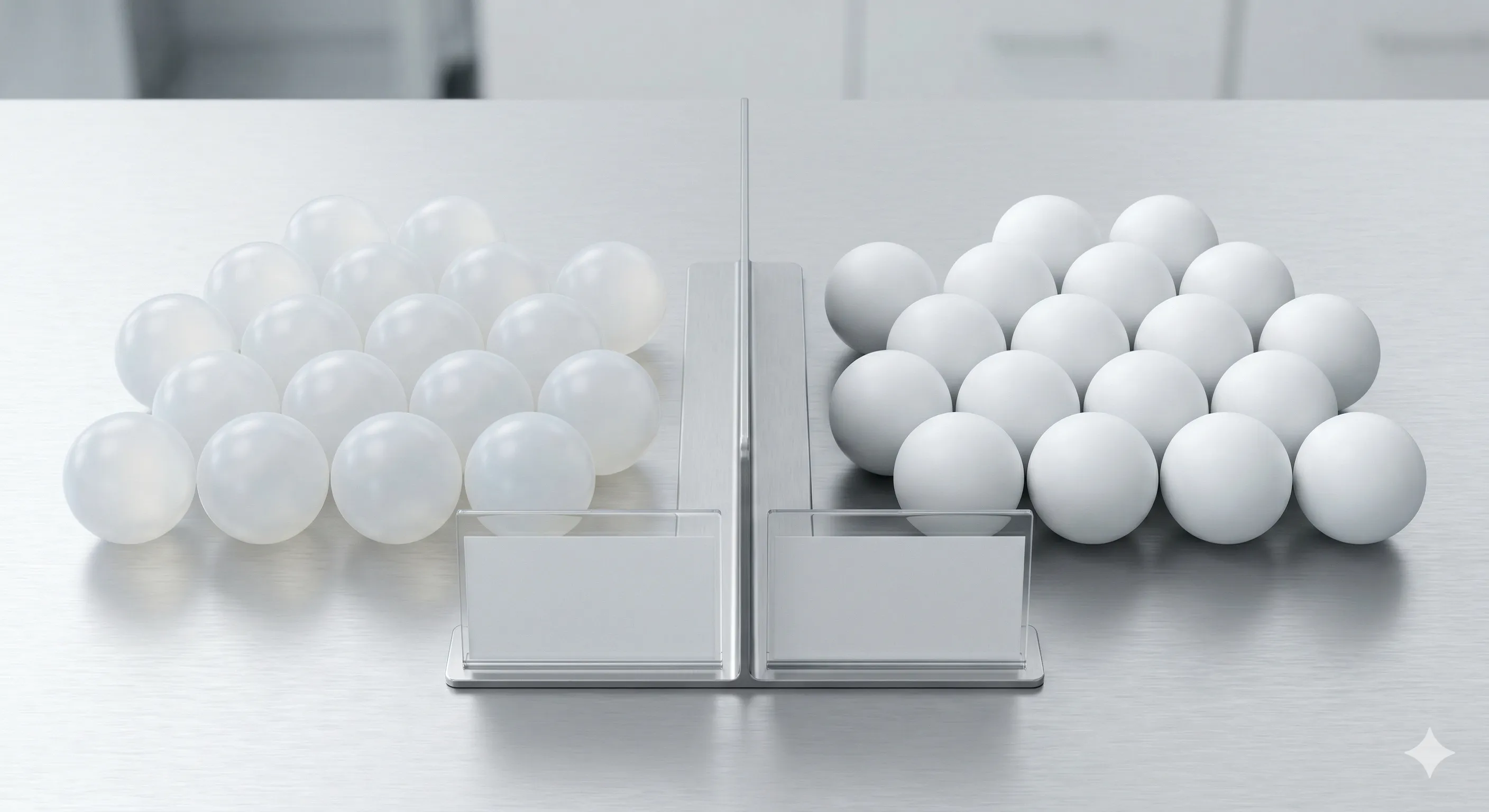
Visual comparison of polypropylene PP and HDPE plastic roll-on balls

Complete Comparison Table: PP vs HDPE for Roll-On Balls

A side-by-side plastic ball material comparison covering the properties that matter most when sourcing precision roller balls:

Property Polypropylene (PP) HDPE
Density0.90 g/cm³0.94–0.96 g/cm³
Melting point160–170°C130–137°C
Operating temperature range-10°C to 100°C-40°C to 80°C
Tensile strength31–42 MPa25–45 MPa
Flexural modulus (stiffness)1.5–2.0 GPa — stiffer1.0–1.5 GPa — more flexible
Impact resistanceModerate — becomes brittle in coldSuperior — stays tough in cold
Coefficient of frictionLow — smoother glideLow
Moisture barrierGoodSuperior
Water absorption<0.03%<0.01%
Alcohol resistanceExcellentExcellent
Acid/base resistanceExcellent (dilute)Excellent (dilute)
Oil resistanceGoodExcellent
Solvent resistanceModerate — susceptible to aromaticsGood — broader spectrum
UV resistanceModerate — requires stabilizerModerate — requires stabilizer
FDA complianceYes — FDA 21 CFRYes — FDA 21 CFR
Relative resin costLower (5-10% cheaper)Higher
Cost per ball (density effect)Lower — lower density = less materialHigher

Material Recommendations by Industry and Application

Based on our experience as a manufacturer and the specific needs of each sector, here are our direct recommendations for choosing your PP or HDPE roller ball material:

PP / HDPE Both for Food Applications

Food Industry: It Depends on the Product

For oils and aroma-heavy products, PP is preferable due to its lower odor absorption. For acidic products or those requiring refrigerated transport, HDPE offers better resistance.

PP for: Olive oils, infused oils, honey
HDPE for: Acidic sauces, refrigerated condiments, vinegars

See the full food-grade page →

HDPE Recommended for Chemicals

Chemical Industry: HDPE as the Industrial Standard

For industrial chemical products, HDPE is the default material. It offers the broadest chemical resistance spectrum, better performance at extreme temperatures, and lower solvent absorption.

Products: Lubricants, flux, adhesives, anti-corrosion products
When to consider PP: Only for alcohol-based products without aggressive solvents

See the full chemical industry page →

Why We Only Use Virgin Resin

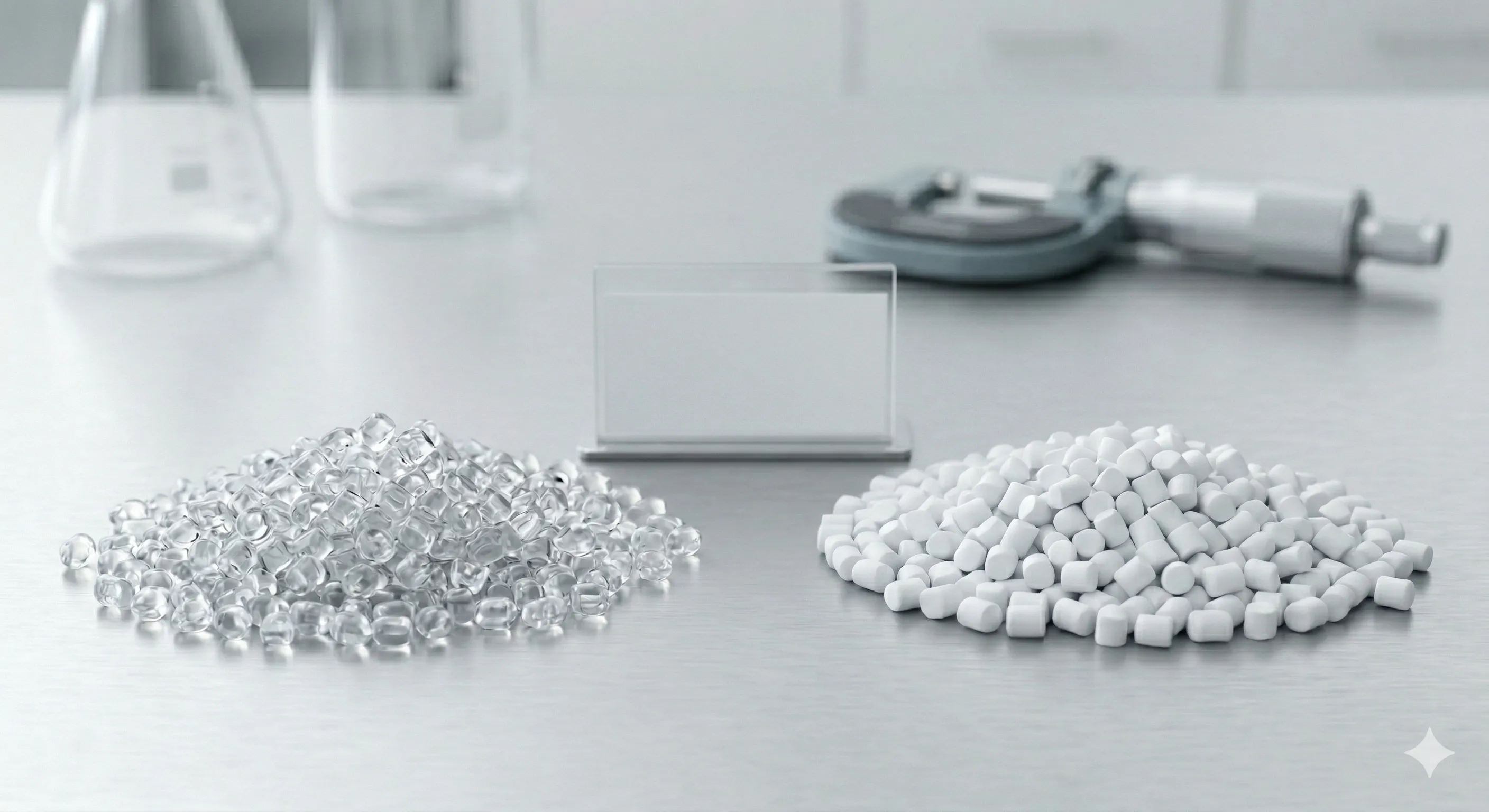
One point deserves technical clarification: the PP and HDPE properties presented in this guide correspond to virgin resins — first-pass material sourced directly from the petrochemical producer, with certified, consistent properties.

Using recycled or reprocessed material in roll-on balls is unacceptable because:

  • Degraded mechanical properties: Each reprocessing cycle shortens the molecular chain length, reducing impact resistance and dimensional stability
  • Potential contamination: Recycled material can contain traces of compounds from its prior use, voiding FDA certifications
  • Batch-to-batch inconsistency: Recycled material properties vary by source, making quality control impossible
  • Regulatory risk: Recycled material does not qualify for FDA 21 CFR certification for food or drug contact

At Molding S.A.S. we use virgin resins exclusively, sourced from qualified suppliers, with a certificate of analysis (COA) for every batch of raw material.

Virgin polypropylene and HDPE resin pellets for manufacturing precision plastic balls

Frequently Asked Questions: PP vs HDPE for Plastic Balls

Polypropylene (PP) resin typically costs 5-10% less than HDPE. Its lower density (0.90 vs 0.95 g/cm³) also means less material per ball, which amplifies the savings at industrial volumes. For most standard cosmetic applications, PP is the more economical choice without sacrificing performance.

HDPE resists a broader spectrum of solvents, especially aliphatic hydrocarbons, mineral oils, and industrial chemicals. PP has excellent resistance to alcohols and acids but is more susceptible to aromatic solvents and strong ketones.

It depends on the range. HDPE: -40°C to 80°C — better for cold climates, cold-chain logistics, and non-climate-controlled storage. PP: -10°C to 100°C — superior for applications involving heat (sterilization, hot products) but unsuitable for extreme cold, where it becomes brittle.

Yes. Both PP and HDPE in virgin resin form comply with FDA 21 CFR for food and drug contact. The certification applies to the specific resin grade used, not to the generic polymer. At Molding we use certified virgin grades exclusively.

Both materials achieve high-quality injection-molded surface finishes. PP tends to produce slightly smoother surfaces due to its lower crystallinity, which can translate into a softer glide on the skin. In practice the difference is minimal and both deliver a satisfactory rolling action.

Yes. Each reference (diameter + material combination) is manufactured independently. You can order 25.40 mm balls in PP for your deodorant line and 35.56 mm balls in HDPE for your pharmaceutical line in the same order, as long as each reference meets the 100,000-unit MOQ.

Need Help Selecting the Right Material?

Send us your formulation's technical data sheet and we will recommend the optimal material for your application. Free of charge, no obligation.